HAMMOND AO-68-1B Tube Organ Amplifier Guitarproject Guitar AO-64 1960S
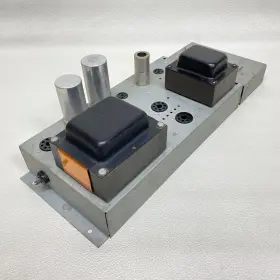
( Brand: Hammond ), ( Manufacturer Part Number: AO-68-1B ), ( Model: AO-68-1B / AO-64-1 ), ( Part Type: Tube Organ Amplifier Guitar ), ( Amplifier Type: Head ), ( Suitable For: Organ )
Review HAMMOND Ao-68 Vintage Tube Organ Amplifier Guitarproject 1960s
The Hammond AO-68-1B, also known as the AO-68 and AO-64, is a vintage tube organ amplifier from the 1960s that offers a unique and rich sound experience for guitar players. This amplifier was originally designed for use with Hammond organ instruments but has gained popularity among guitarists for its distinctive tone and versatility.
The AO-68-1B is a 60-watt, Class AB amplifier with four 6L6 output tubes, two 6V6 preamp tubes, and five 12AX7 preamp tubes. It features a spring reverb effect, a tone control section, and a foot-switchable Leslie speaker emulation for adding an authentic rotating speaker cabinet sound.
The cabinet of the AO-68-1B is constructed with plywood and modotone plaster, providing a solid and resonant platform for the speaker elements. The unit comes with two 12-inch Jensen speakers that deliver a powerful, full-range sound with excellent clarity and definition.
This amplifier has a user-friendly control panel on the front grille. The tone stack consists of bass, mid, and treble controls that allow for precise adjustments to the tone and timbre of the sound. The master volume control helps maintain a consistent sound level, while the master tone control provides an overall tone shaping effect. The presence control adds a distinctive high end response to the sound.
The footswitchable Leslie speaker emulation means you can take advantage of the rotating speaker effect without requiring a separate Leslie cabinet. The reverb control allows you to adjust the level of the spring reverb effect, adding depth and space to your tone. If you desire a dry signal, a bypass switch is also provided.
The Hammond AO-68-1B is more than just a guitar amplifier it's a piece of music history and a highly sought-after collectible for audiophiles and prog rock enthusiasts. Its '60s retro style, unique tone, and versatile features make it an excellent addition to any musician's arsenal. If you're in search of an amp that delivers an expansive and expressive sound, look no further than the iconic Hammond AO-68-1B tube organ amplifier.
A Comparison of Hammond AO-68-1B, AO-68, and AO-64 Tube Organ Amplifiers for 1960s Guitar Projects: Pros, Cons, and Recommendations
I. IntroductionHammond organ amplifiers have long been regarded as high-quality and versatile audio equipment, particularly in the realms of both organ and guitar music. Among the Hammond tube organ amplifiers, the AO-68-1B, AO-68, and AO-64 models are widely used in 1960s guitar projects. In this comparison, we'll discuss the pros, cons, and potential recommendations for these three tube organ amplifiers to help you make an informed decision for your project.
II. Hammond AO-68-1B Tube Organ AmplifierA. Pros
1. Adaptable: Can be used for both guitar and organ applications
2. Wide waveform selection: Offers a range of tones from vibrato and rotary to rhythm and percussion
3. Durable: Known for their sturdy design and longevity
B. Cons
1. Complex setup: Requires significant time and effort for installation and configuration
2. Size and weight: Bulky and heavy, needing a dedicated space
3. Cost: Historically, these units have remained more expensive than other options
III. Hammond AO-68 Tube Organ AmplifierA. Pros
1. Rich tones: Produces lush, warm sounds for guitar and organ, making it very versatile
2. Transformers: High-quality transformers result in clear and defined tones
3. Customizable: Offers selectable input impedance and gain controls for further tone shaping
B. Cons
1. Size and weight: Similar to AO-68-1B, offering limited portability
2. Complexity: Requires significant time and effort for setup and configuration
3. Cost: Historically, these units have remained in the higher price range
IV. Hammond AO-64 Tube Organ AmplifierA. Pros
1. Economical: Compared to the AO-68 and AO-68-1B, the AO-64 is more affordable
2. Lightweight and compact: Smaller size makes it easier to transport and install
3. Flexible: Has a range of features making it useful for a variety of applications
B. Cons
1. Limited waveforms: Offers fewer waveforms and tonal options than the AO-68 or AO-68-1B
2. Build quality: The components and build quality of the AO-64 are generally not as high as the AO-68 and AO-68-1B
V. Recommendations and ConclusionWhen considering the Hammond AO-68-1B, AO-68, and AO-64 tube organ amplifiers for your 1960s guitar project, it's essential to weigh the pros and cons and understand your specific requirements. Here's a summary of our recommendations based on the discussed points:
1. If you're looking for the most versatile and highest-quality tone, consider the Hammond AO-68 or AO-68-1B. These amplifiers offer the widest range of tonal possibilities and highest build quality, although they come with greater complexity and cost.
2. For a more budget-conscious and portable solution, the Hammond AO-64 can be a suitable choice. While it doesn't provide the same tonal depth as the AO-68 and AO-68-1B, it still offers a range of features and offers a more economical and compact solution.
3. Remember that appropriate tube amplifier selection for 1960s guitar projects not only relies on discussed points but also on your individual preferences, budget, and the specific requirements of your project.
In conclusion, careful consideration of the features, pros, and cons of each model will help you make an informed decision when choosing between the Hammond AO-68-1B, AO-68, and AO-64 tube organ amplifiers for your 1960s guitar project.
Details:
Vintage Hammond AO-68-1B and AO-64-1 tube amplifiers in good condition. Tubes and other accessories/parts not included. Taken from a working K-100 series organ; sold as is. Shows normal cosmetic wear and tear throughout see photos.
These units have serious potential as WiFi or guitar conversions.
specifications guitoamps:
- brand: Hammond
- mpn: Ao-68-1b
- model: Ao-68-1b / Ao-64-1
- part type: Tube Organ Amplifier Guitar
- amplifier type: Head
- suitable for: Organ
shipping guitoamps:
- cost: $39.00
- service: Standard
- transit: 7-12 Days
- class: Standard
- type: Fixed
seller guitoamps:
- rating: 100.0%
- # reviews: 552
- city: North Hollywood, California
offer guitoamps:
- best offers: True
- sold: 0
- started: December 19, 2024
- availability: In Stock
- options: Ship-to-home
- quantity: 1
returns guitoamps:
- policy: No Returns
payments guitoamps:
- credit card: Diners-club
- wallet: Paypal
- other
general guitoamps:
- condition: Used
- Musical Instruments Gear > Guitars Basses > Guitar Amplifiers
Hammond AO-68-1B Is Similar To:
- Hammond H-ao-28-5 Ao-28 Vintage Tube Organ Pre-amplifier B3 A-100 Project (71.3% similar) Tubes and other accessories/parts not included. Heres a vintage Hammond H-AO-28-5 tube organ amplifier in good condition. This unit has a blown filter cap and Hans't been tested so its being sold as-is. Also has great potential for a hi-fi or guitar conversion project. This classic is...(June 5th, 2024)
- Hammond Ao-21194-1 Vintage Rt Pedal Solo Unit Tube Organ Amplifier 1950s (60.3% similar) Tubes and other accessories/parts not included. For sale is a vintage Hammond AO-21194-1 tube amp' from an rt-series organ pedal solo unit in good condition...(June 6th, 2024)
- Hammond Ao-10a Vintage Tube Organ Amplifier Hi-fi Guitar Amp Project C 1950s (79.8% similar) Taken from a 1950S-ERA Hammond organ, this is perfect to replace your defective organ or as guitar hi-fi amplifier conversion project. Vintage Hammond AO-10A organ tube preamps in good condition. Tubes and other accessories/parts not included...(June 6th, 2024)
- Hammond Ao-39 Diy Guitar Amp (42.9% similar) Worked when pulled. Tubes included. Removed from a Hammond organ...(November 20th, 2024)
- Hammond H-ao-35-7 Ao-35 Vintage Tube Organ Reverb Guitar Amplifier Project (70.9% similar) Zs popular Carmen Gaia is actually a clone of this unit. This was taken from a working unit and is in good cosmetic shape, with some normal signs of use/age throughout see photos. Tubes and other accessories/parts not included. This is popular for guitar conversions, and Dr...(December 19th, 2024)
- Hammond Ao-15-c Ao-15 Vintage Tube Organ Amplifier Hi-fi Guitar Amp Project 1950s (82.6% similar) Great for your next guitar amp, hi-fi project or Hammond cab restoration. This was taken from a working unit and is in good shape overall, with some normal cosmetic signs of use/age throughout see photos. Heres a vintage Hammond AO-15-C amplifier that originally came from JR-20 tone cabinet the...(January 24th, 2025)
- Hammond H-ao-33-1 Lot Of 40 H-ao-33 h-ao-32 h-ao-15 Tube Amplifier (45.3% similar) $2200 for all lot of 40. Used 6V6/6BQ5/6SN7/12AX7/5U4/12BH7 tube...(June 28th, 2025)
- Utah Rvb-1 Vintage Rare Hammond utah Tube Reverb Amplifier Unit Model (45.8% similar) Due to its age and having tubes in the as I do not have a Mauriac power it up properly am selling as-is/for parts or repair. Comes as pictured. It has been sitting unused for many years...(July 4th, 2025)
- Hammond P-tgo-001 Mfg 1750 1760c Output Transformer Tube Guitar Amp (39.5% similar) Hammond transformer. 3.2, 8, 16 ohm sec. 5w o/p PRO 5/8K, sec 3.2/8/16 Hammond pn 1760C, slightly been used, watts amplifier type single ended. Hammond series. Secondary impedance ohms 3.2, 8, 16. Hammond product group transformers. Winding type bobbin...(July 14th, 2025)
- Hammond Ao-10 Preamp Rt-2 Organ Ao-21194-1 Solo Pedal Amp Type (40.5% similar) Item is being sold as is, has not been tested. Sold for parts...(July 29th, 2025)
- Hammond 1750e Output Transformer Tube Guitar Amp (39.4% similar) Hammond 1750E output transformer sold as shown 080825G28...(August 8th, 2025)
